Choose an ELDT Package
Online, self-paced theory training. Enroll today and we'll upload your certificate to the FMCSA national registry automatically.
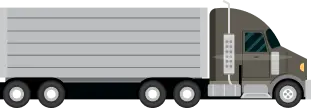 Class AELDT
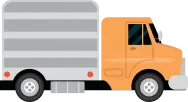 Class BELDT
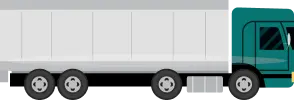 Class B > AELDT
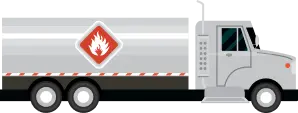 HazmatELDT
 PassengerELDT
 School BusELDT
ELDT Theory
On February 7, 2022, the FMCSA Entry-Level Driver Training (ELDT) rule went into effect — a two-part requirement for anyone wanting to obtain or upgrade a CDL.
Who needs ELDT?
Training is required if you plan to:
While there is no minimum number of hours required, you must cover all FMCSA topics: orientation, control systems, pre-and post-trip inspections, basic control, shifting, coupling, visual search, communication, and distracted driving speed management.
How It Works
Three simple steps to get certified
No final exam — simply complete all lesson material.
Your certificate will be uploaded to FMCSA's national registry automatically, notifying the DMV that you've completed the theory portion.
ELDT FAQ
Everything you need to know about the Entry-Level Driver Training requirements.
The new ELDT rule is not retroactive, meaning that it only applies to prospective CDL holders. If you already have your CDL, you are not required to take any additional training. It only applies to those who are:
• Getting their CDL for the first time
• Upgrading their existing CDL from Class B to Class A
• Obtaining a new hazmat, passenger, or school bus endorsement
No, the new ELDT rule does not require a specific number of hours. However, it does require that you receive both classroom and behind-the-wheel training. The total amount of time will depend on the institution you choose to attend.
The rule requires training providers to give students the opportunity to complete both the theory and practical components at their own pace. The most important part of the theory component is the ELDT final exam, which must be completed before you can move on to the practical component. The student must pass with a score of 80% or higher.
Practical training must be conducted in a vehicle that is representative of the type of commercial vehicle you will be driving. Once you have completed both the theory and practical components, your training provider will submit your information to the national registry.